Case study
Redesign of NASA APoD
Using NLP to redesign and build a new NASA's Astronomy Picture of the Day app increasing engagement and reducing churn by 60%
Digital Design, Mobile Design
Ongoing
Responsibilities
Interaction design
UI Design
Prototyping
Tools
Figma
Xcode
Google Cloud Platform
Teams
3 UX Designers
2 Engineers
Context
Project overview
NASA's Astronomy Picture of the Day website lacks thoughtful design, and third-party mobile apps fail to truly help people appreciate the cosmos. This project is a complete redesign of the APoD experience by designing and building an app that transforms how people engage with astronomy.
By reimagining the interface and user journey around the NASA APoD API, the goal is to inspire curiosity, make the cosmos more accessible, and help people develop a deeper appreciation for astronomy through thoughtful design and interaction.
Current situation
NASA APoD website
Third-party APoD apps
- Presents raw data without an engaging experience
- Low incentive for casual users to return, limiting its appeal to non-enthusiasts
- An Instagram-like feed on endless scroll with a date picker
- Doesn't tell any story or take you on a journey, however it has a comment section
API Analysis & AI Integration
Understanding the NASA APoD API
Response structure
{
  "date": "YYYY-MM-DD",
  "title": "string",
  "explanation": "text",
  "url": "image URL",
  "copyright": "string"
}
The NASA Astronomy Picture of the Day API returns a single day's image and metadata. Use the date parameter to request a specific day. While comprehensive, it lacks narrative structure, emotional context, and the editorial curation that transforms data into an engaging experience.
- Returns JSON response with daily astronomy picture data
- Requires API key for authentication
- Rate limit: 1000 requests per hour
All astronomy
Discover the cosmos.
Experience space.
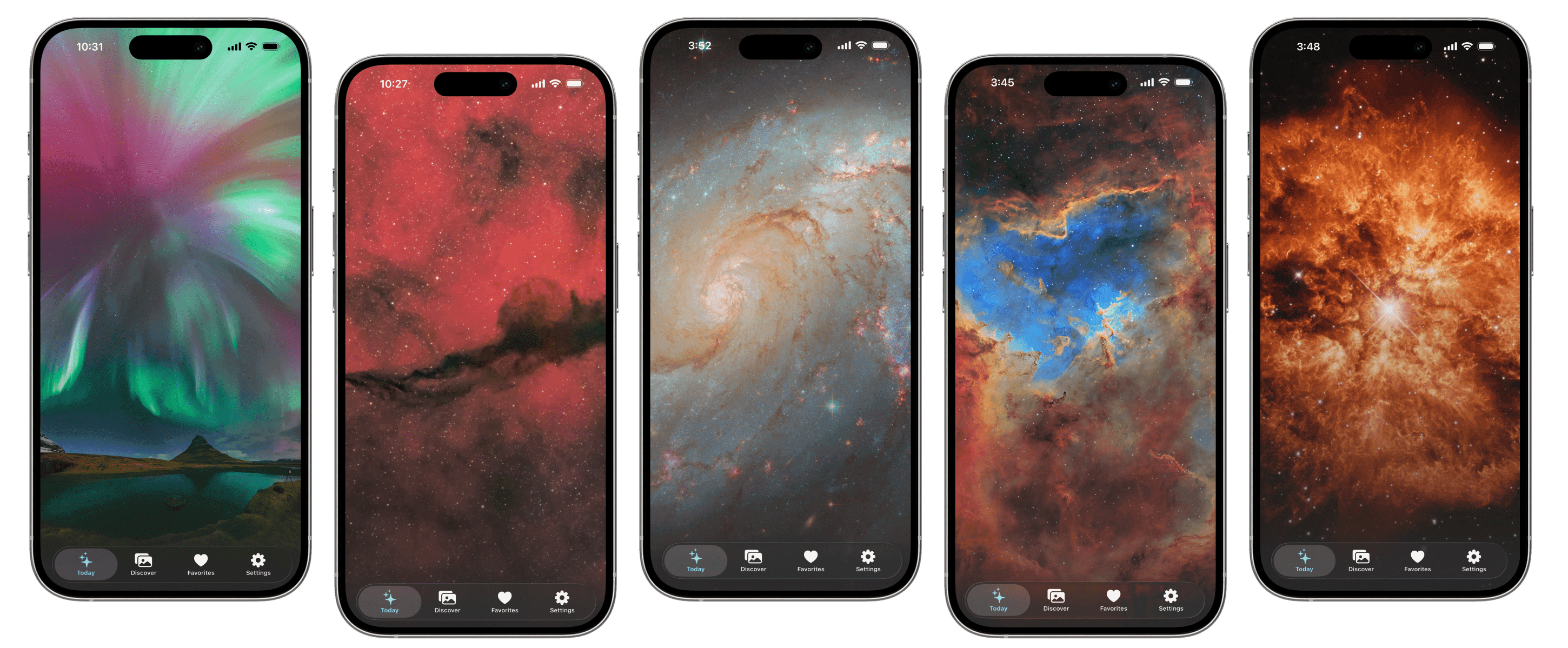
The universe is vast, ancient, and endlessly beautiful. Each day brings a new image, a new story, and a new reason to look up. Explore NASA's Astronomy Picture of the Day and see the cosmos like never before.
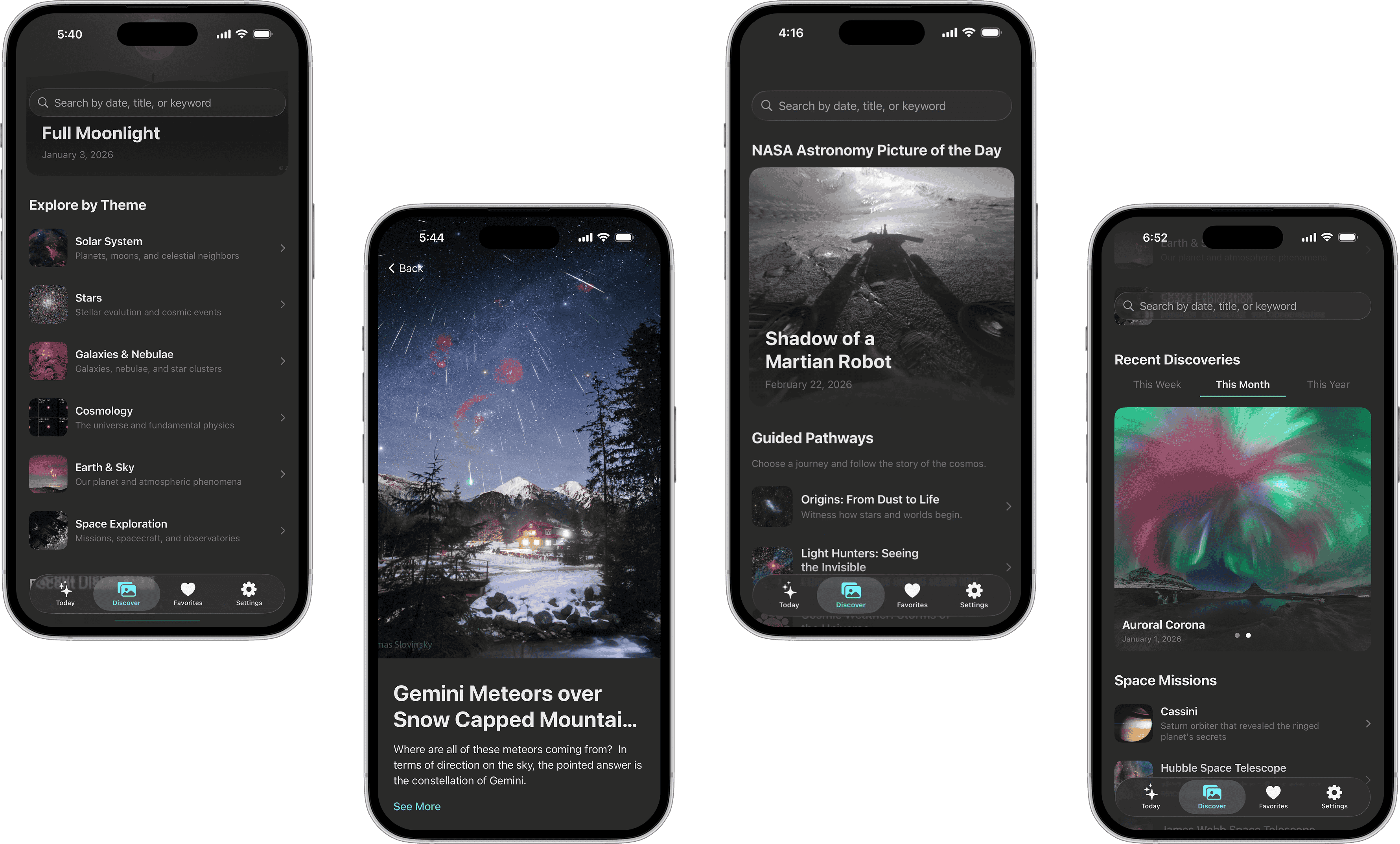
Smart themes that
change overtime.
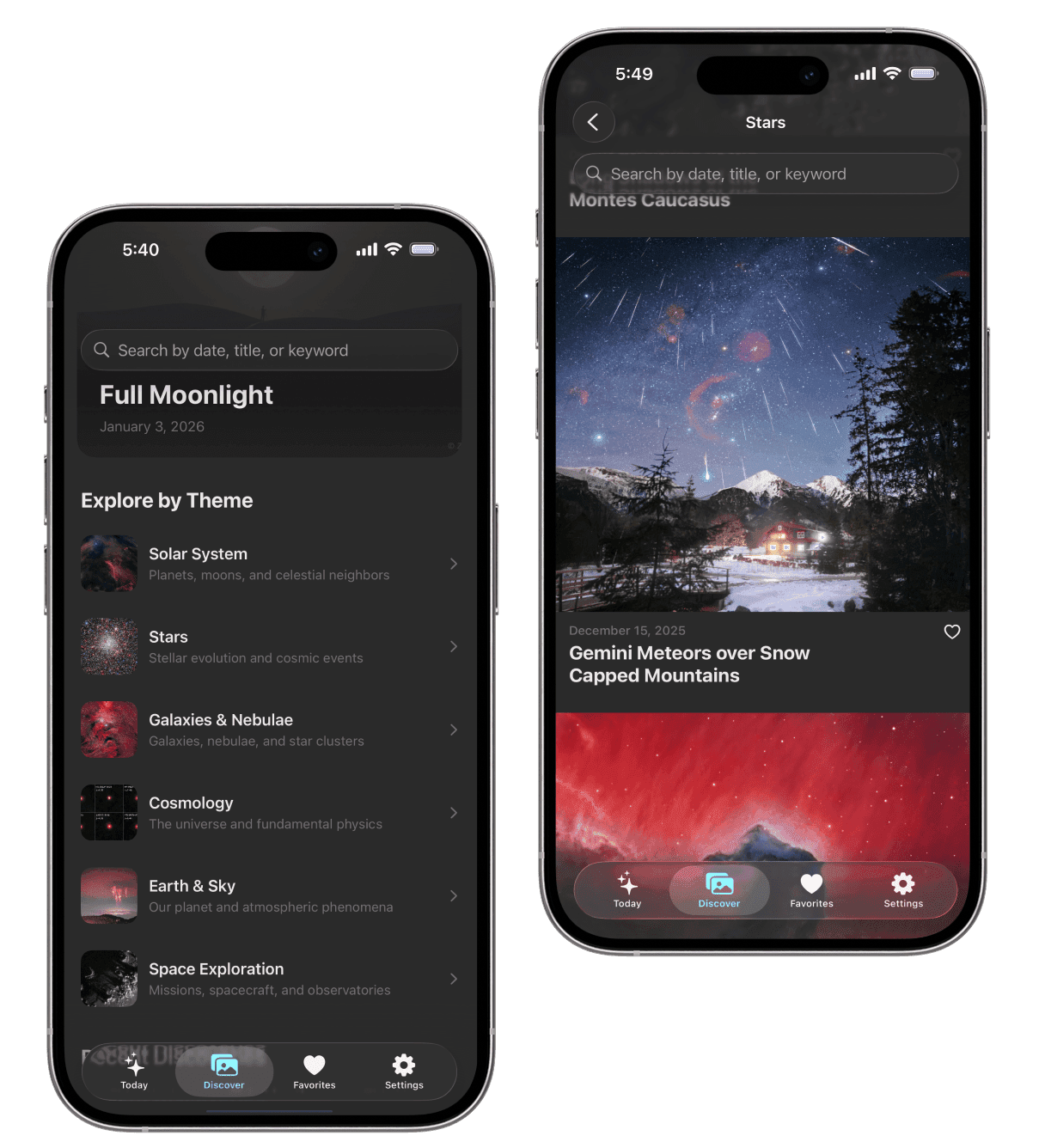
Users can explore astronomy through curated themes that evolve with the cosmos itself. Its actively curated by a natural language processing (NLP) algorithm that these make the themes intelligently adapt over time, reflecting recent discoveries, trending events, and the ever changing narrative of space exploration.
Follow space missions
and events.
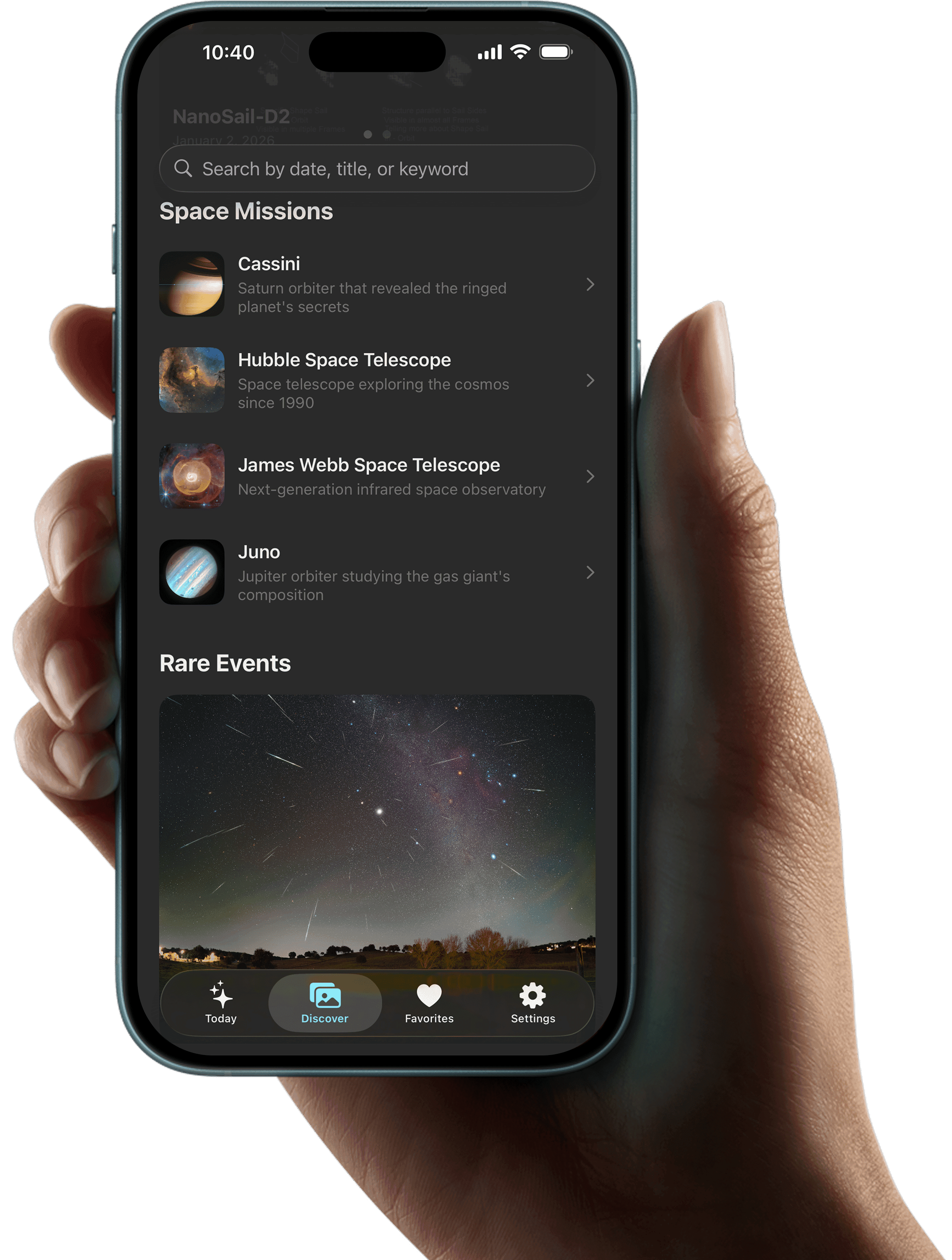
Designed to leverage the NLP's ability to understand context and meaning, it automatically groups space mission updates from astronomy images into curated collections. This AI-powered curation transforms how users discover and follow ongoing space explorations, presenting mission progress as a cohesive narrative rather than scattered updates.
Discover rare events
and recent discoveries.
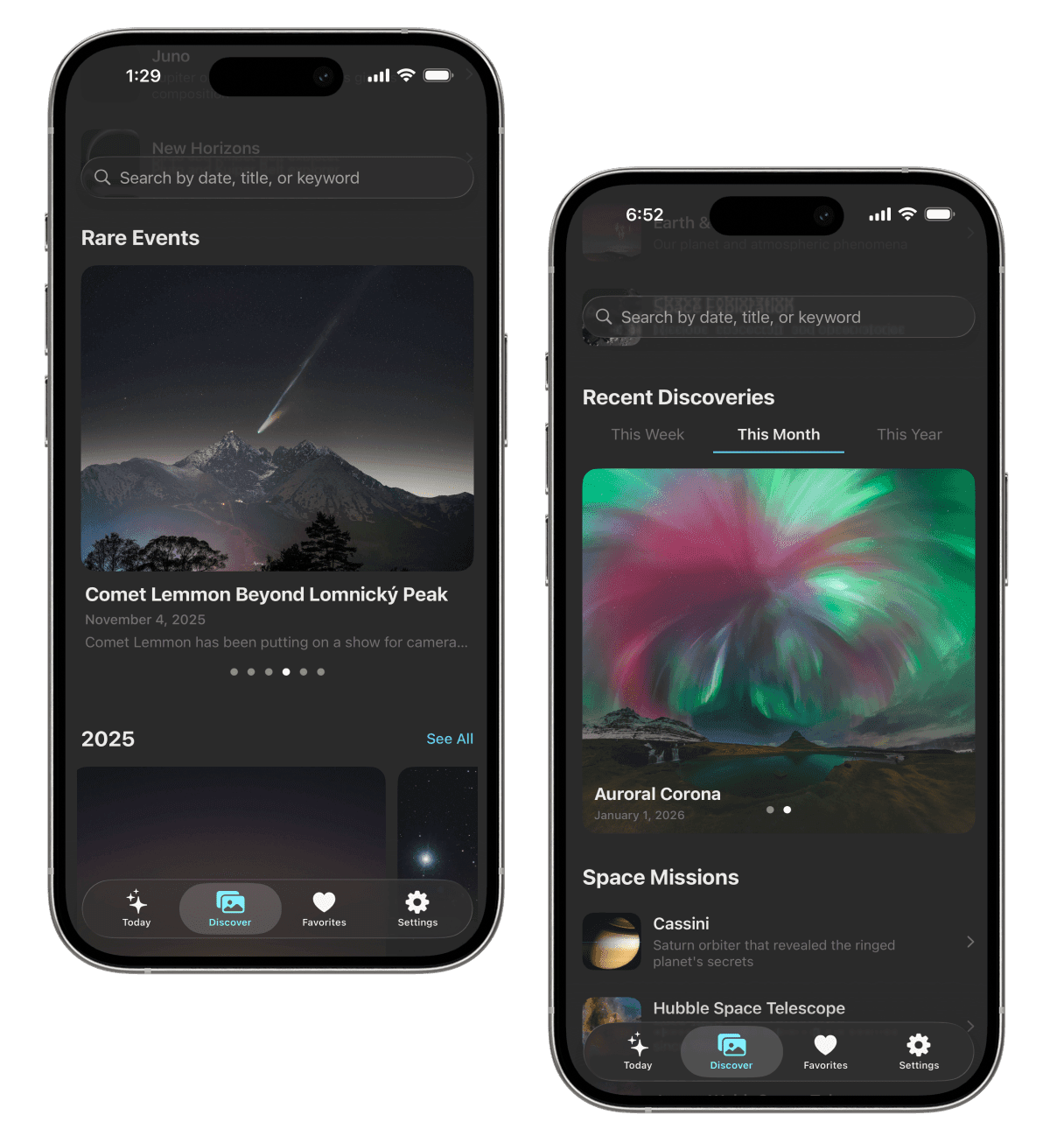
Rare cosmic events and groundbreaking discoveries are intelligently organized through semantic categorization. The natural language processing system understands meaning and context, grouping related phenomena in ways that reveal deeper connections. This approach transforms how users explore the cosmos, rather than just browsing images, they uncover the stories that connect them.
A new way to look up and appreciate
NASA's Image of the Day.
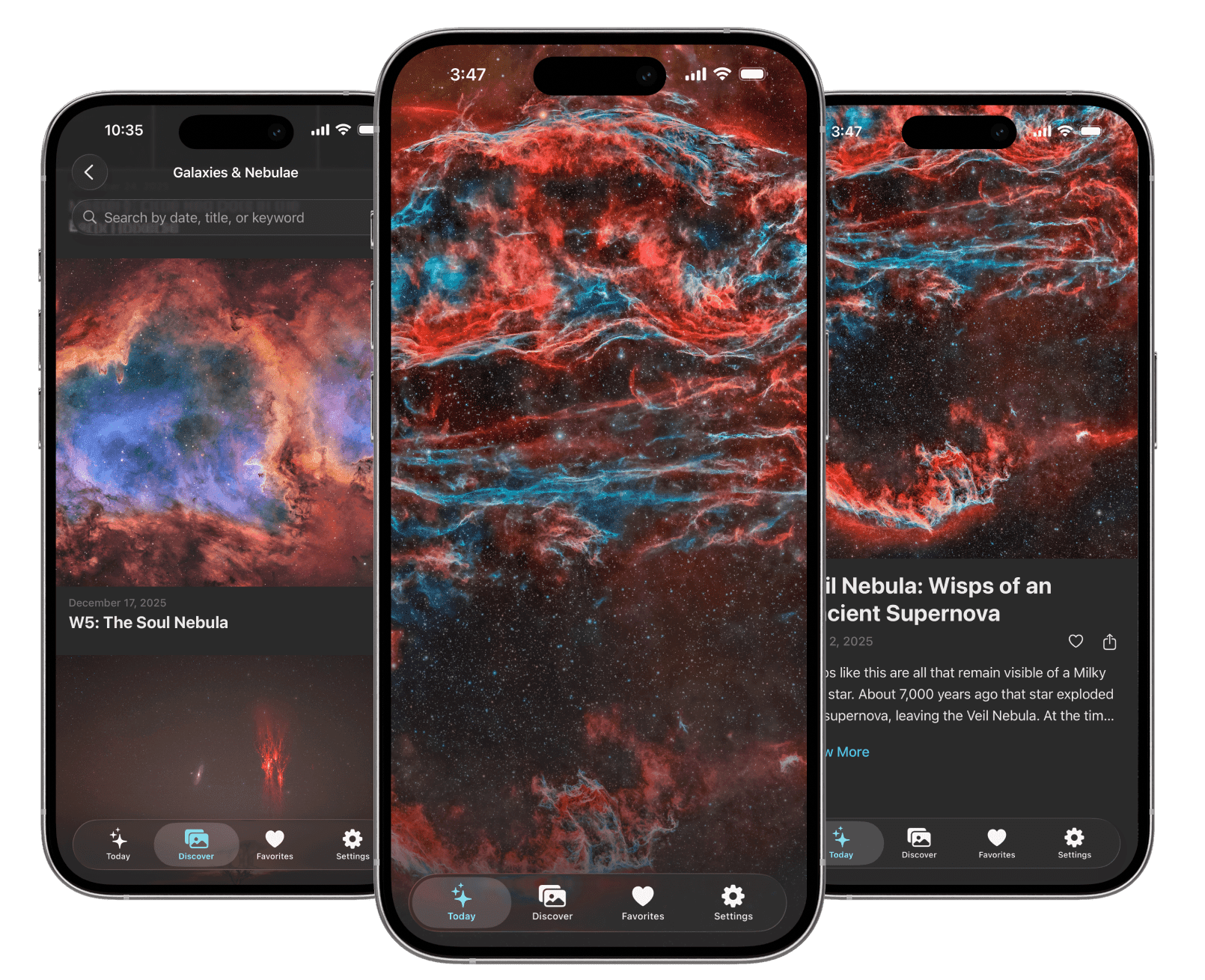
The NASA Astronomy Picture of the Day view was designed to let the image stand alone first, allowing users to appreciate the details without distraction. Only when they slide / swipe up do they discover the story behind the image such as its name, description, and the wonder it represents. This intentional moment of pause transforms viewing into an experience of discovery unlike the alternative apps.
Design Implementation
When the user taps on the image, the aniamted caret serves as a signifier for the swipe affordance
The swipe animation only minimizes the image to reveal some information about the image to reduce cognitice load and enhace the experiecne.
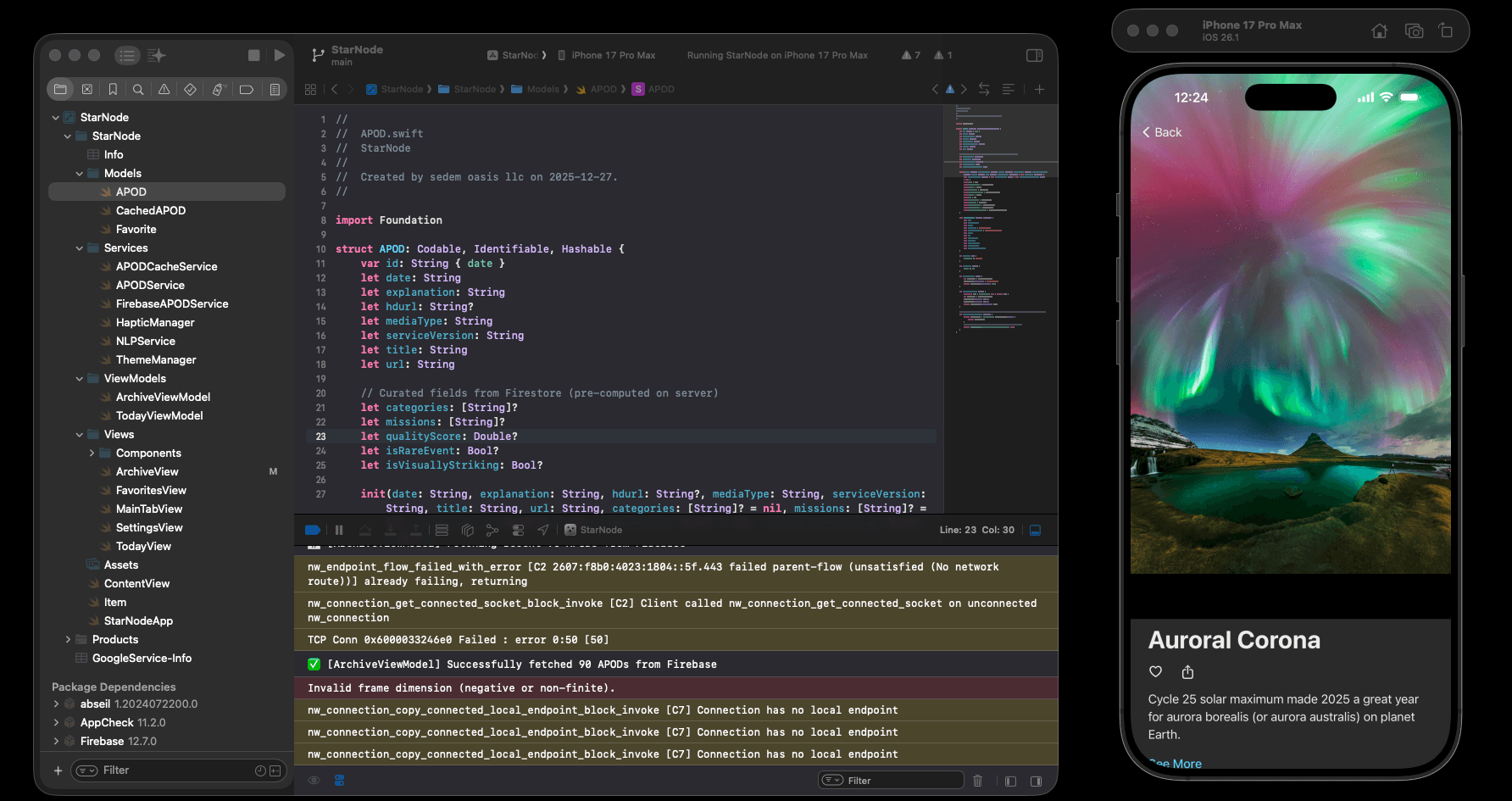
Process of building all-astronomy app on xcode
Coming Soon
Where this exploration leads
01 · Immersive depth for APOD images
Subtle 3D parallax and scroll‑driven zoom will make each image feel like a window into space, not just a flat photo.
02 · Interactive story layers:
Tap‑to‑reveal annotations and staged “zoom into the cosmos” views will turn technical APOD descriptions into approachable, guided stories.
03 · Guided journeys
Short, curated sequences (onboarding, theme selection, guided pathways) will lead people through the cosmos step‑by‑step instead of one image at a time.