Flux Agents
Logistics agent product
Flux Logistics is a small but growing company offering alternative door-to-door shipping from the U.S. to Ghana. The work focused on helping field agents plan pickups and commitments with less cognitive load and fewer coordination mistakes.
Responsibilities
UX Research
UI Design
Iterative Prototyping
Tools
Figma
Miro
Lighthouse
Teams
3 UX Designers
2 Engineers
1 Product Manager
Platforms
Web · Mobile
Jan 2026
The Challenge
The core issue wasn't digitizing pickups it was supporting high stakes decisions with incomplete context. Agents were committing to routes while juggling WhatsApp threads, phone calls, and mental maps of distance, capacity, and timing leading to avoidable conflicts and coordination churn.
Findings
Decision overload
Agents accepted routes without a reliable view of distance, time windows, and conflicts.
Capacity blindness
No quick way to see workload across the day, causing missed or overbooked commitments.
Communication gap
Updates were reactive; missed calls and unclear ownership reduced trust with customers.
Constraints
The solution had to be low-friction, fast on mobile, and usable with minimal training.
Goals
Reduce cognitive load at the moment of decision.
Help agents assess feasibility without relying on memory.
Improve coordination and transparency from agents.
The Work Behind the Work
Finding the right scheduling experience
We tested three approaches. A form front-loaded agents had to work through it. An inline layout which fragmented the flow. The card layout worked best: : it presents pickup times based on what agents already have scheduled, so they can review and confirm in one pass.
Claiming shipments without the mental gymnastics
Three layouts. The grouped table is what stuck. Related shipments sit together, with a toggle between date and zone views so agents can decide what to claim next without scanning a flat list or juggling a split view. Faster decisions, more confident picks.
Built for every agent, on every device
Accessibility wasn't a checklist item, it was a design constraint from the start. Every iteration was tested against WCAG 2.1 AA standards, with keyboard navigation, focus indicators, and screen reader labels baked into the core agent flows.
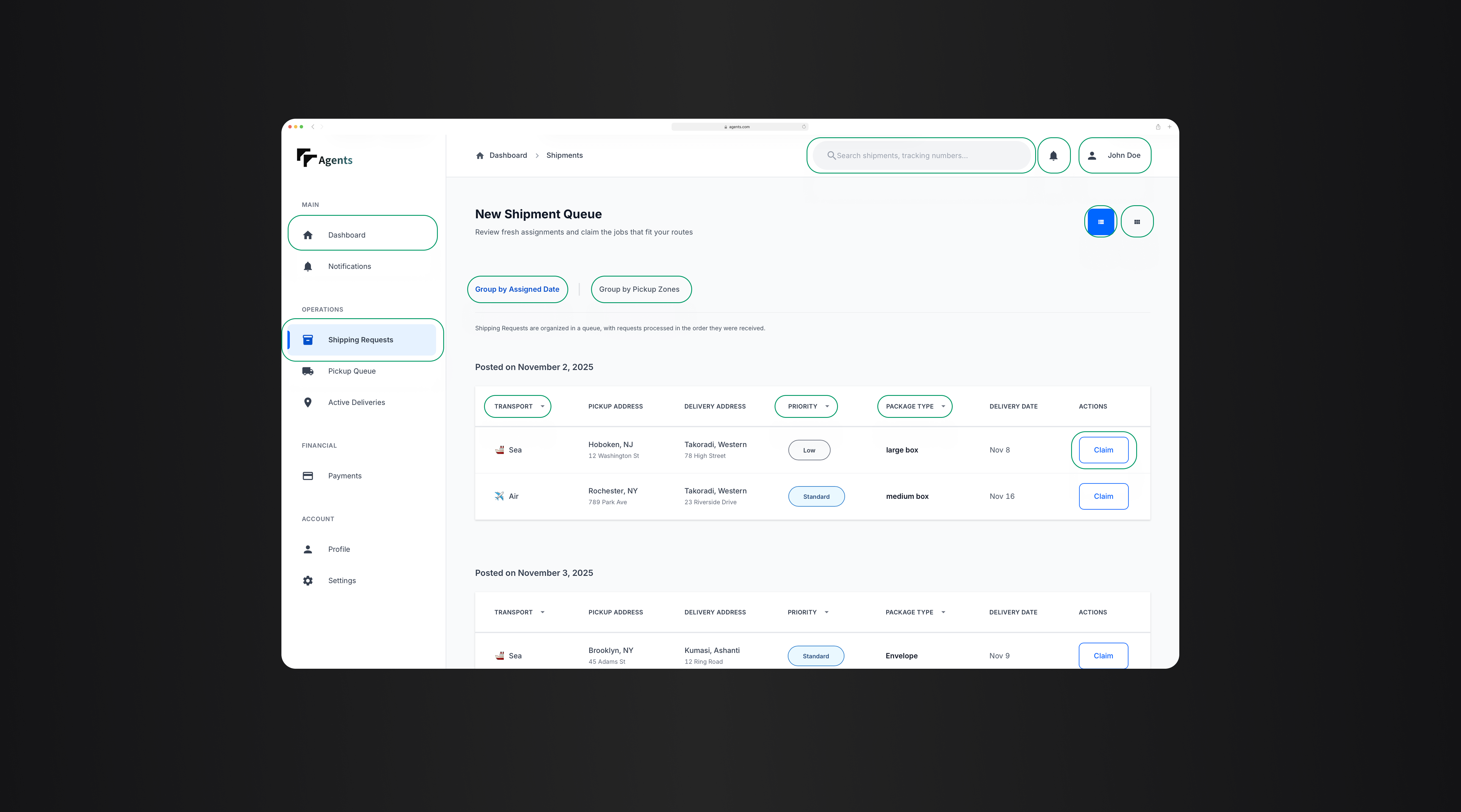
Visible focus rings and states so agents always know where they are in the flow — especially in bright or low-contrast field conditions.
The Finished Product
All the context. Right where you need it.
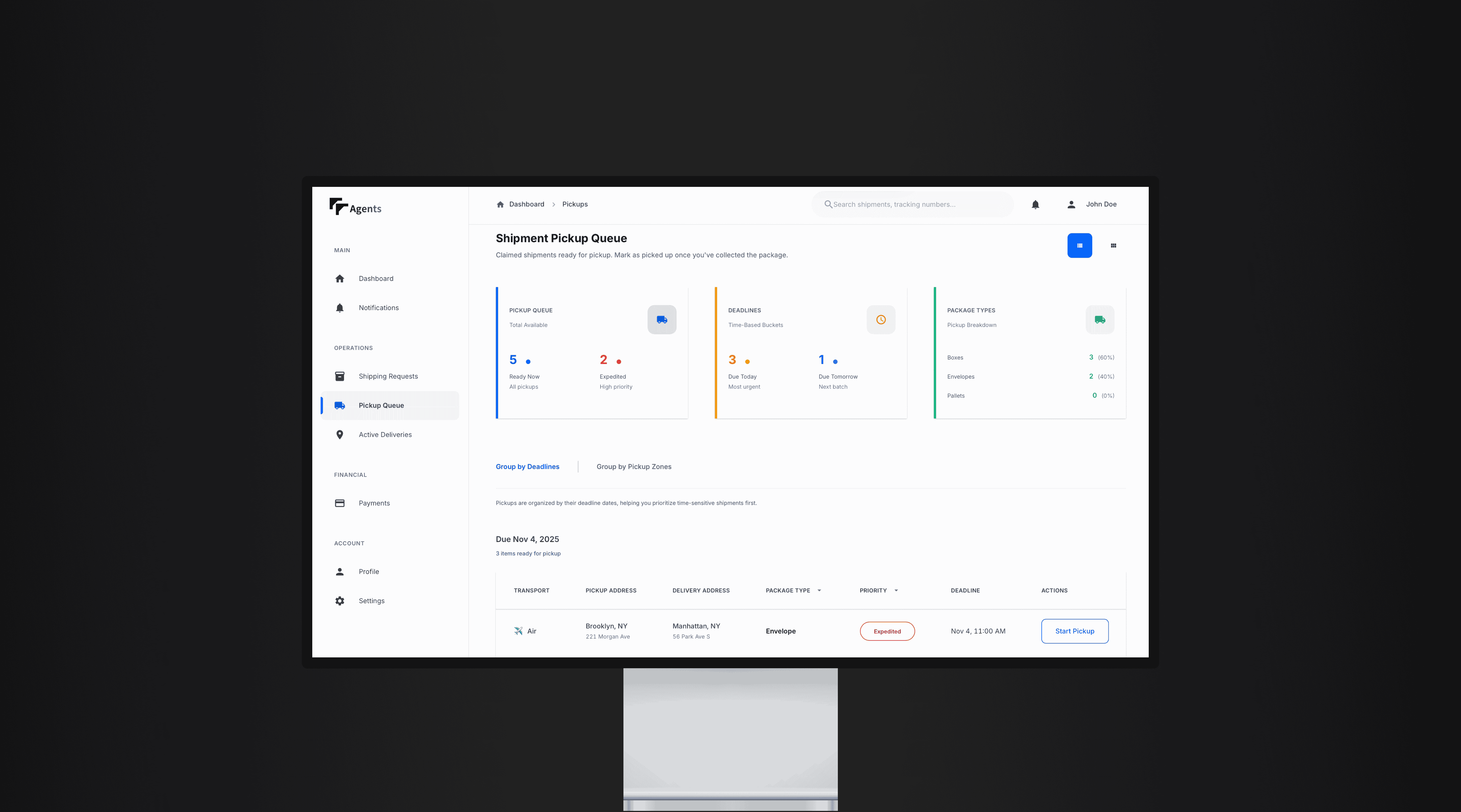
Agents get everything in one place address, package details, and shipment information without jumping between screens or hunting for context.
Shipments that fit together.
Rather than leaving agents to manually piece together compatible pickups, the system suggests groupings upfront surfacing route feasibility and conflicts before anything gets committed. Agents spend less time second-guessing and fewer runs end in scheduling collisions.
Every claimed shipment, in order.
Every claimed shipment, organized by what matters most. Deadlines, package types, read status, and expedited flags surface upfront so agents always know what to take, what to defer, and why.
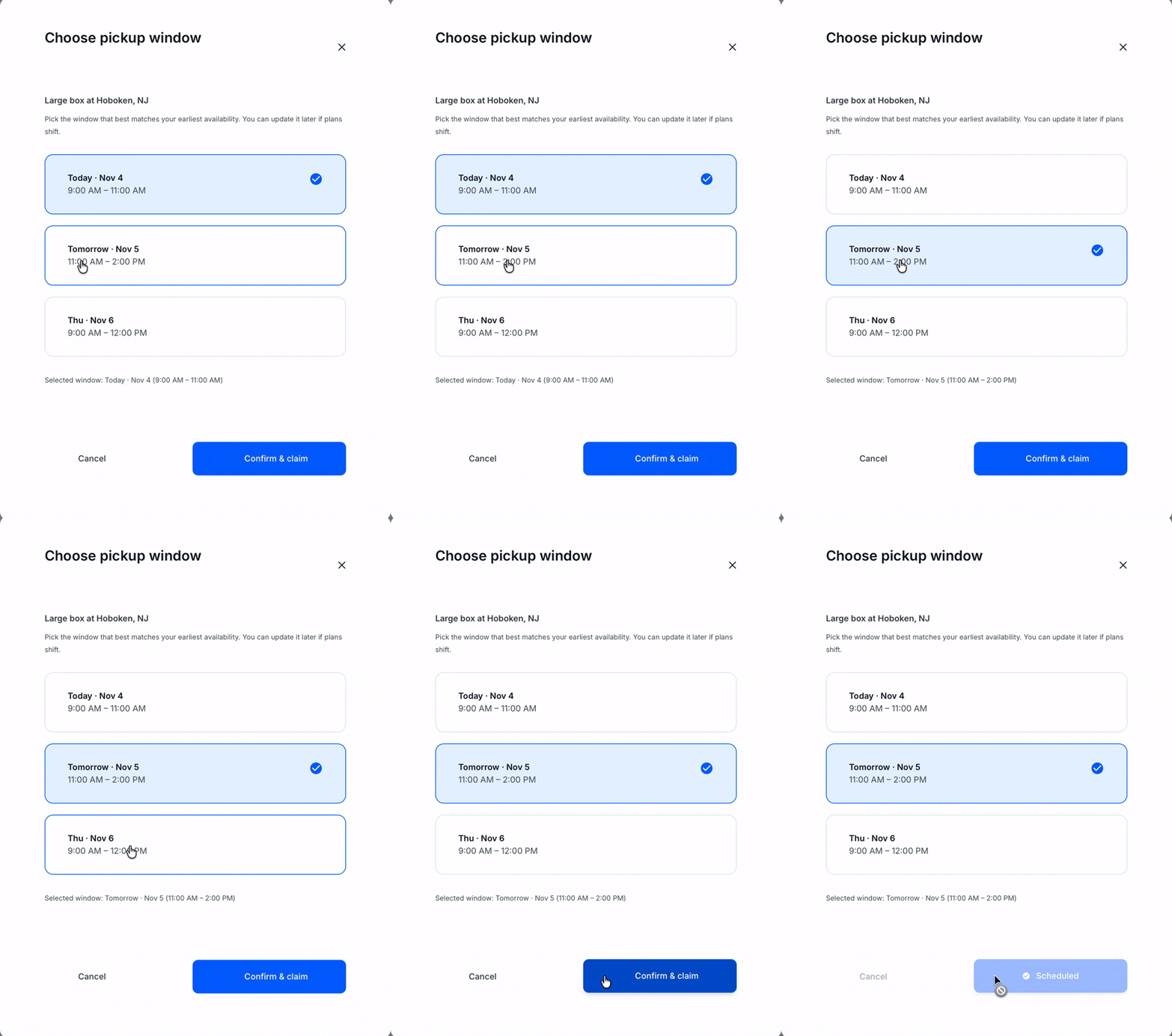
No juggling time windows. Agents see what fits, claim it, and get moving.
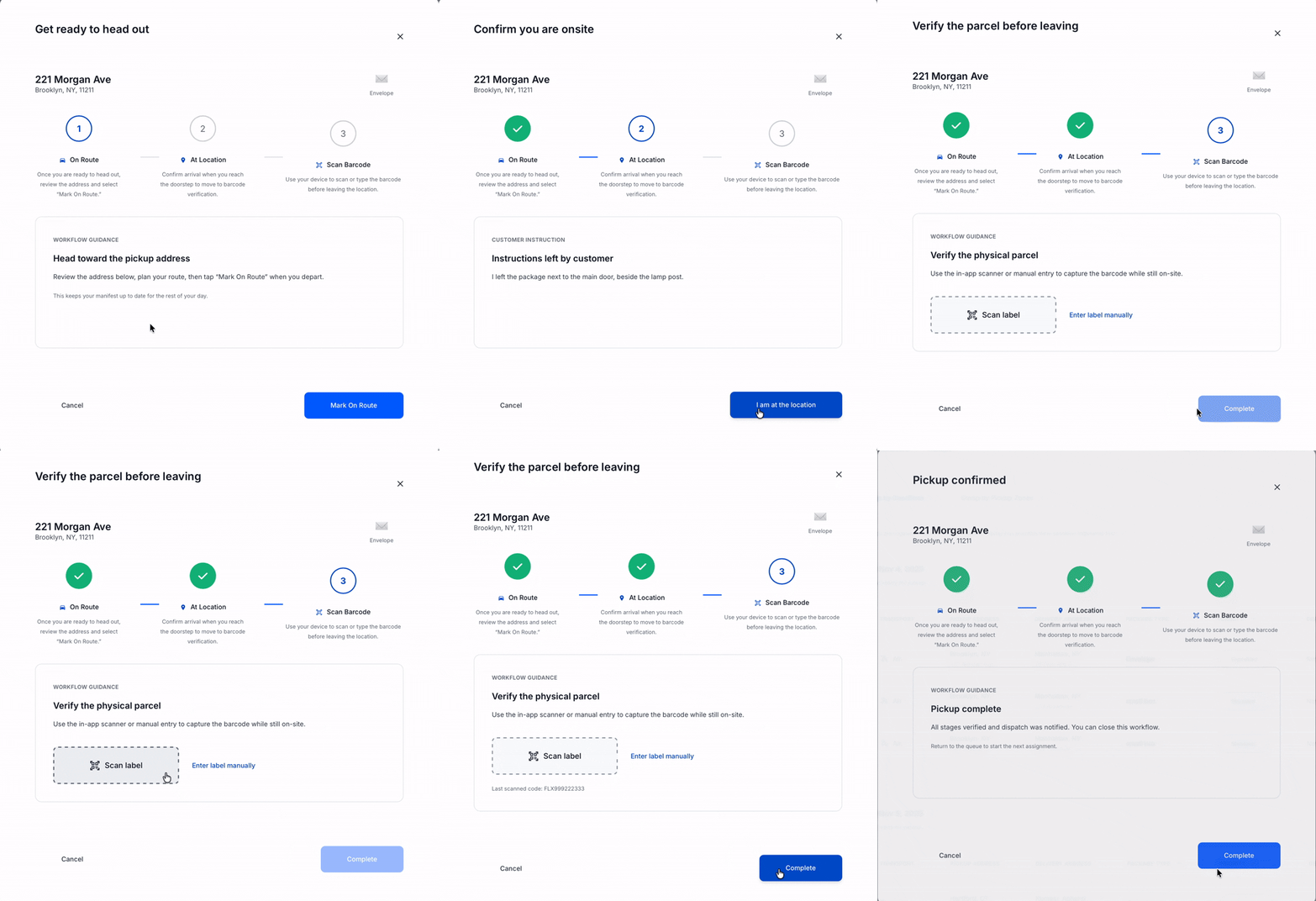
Fast status updates keep customers and ops aligned, reducing “where is it?” follow-ups and missed handoffs.
Your day, before it gets away from you.
Shipment activity, performance metrics, payments, and earnings all in one view. Agents know exactly where they stand, at any point in the day.
Impact
Outcomes that moved operations
30%
Reduction in daily route planning time per agent
34%
Increase in shipments handled per agent
60%
Reduction in missed or double-booked pickups
40%
Reduction in pickup cancellations
90%
Of cases required zero manual planning
70%
Reduction in time spent clarifying assignments
Accessibility
WCAG 2.1 AA
Quality bar
Keyboard & screen reader checks